
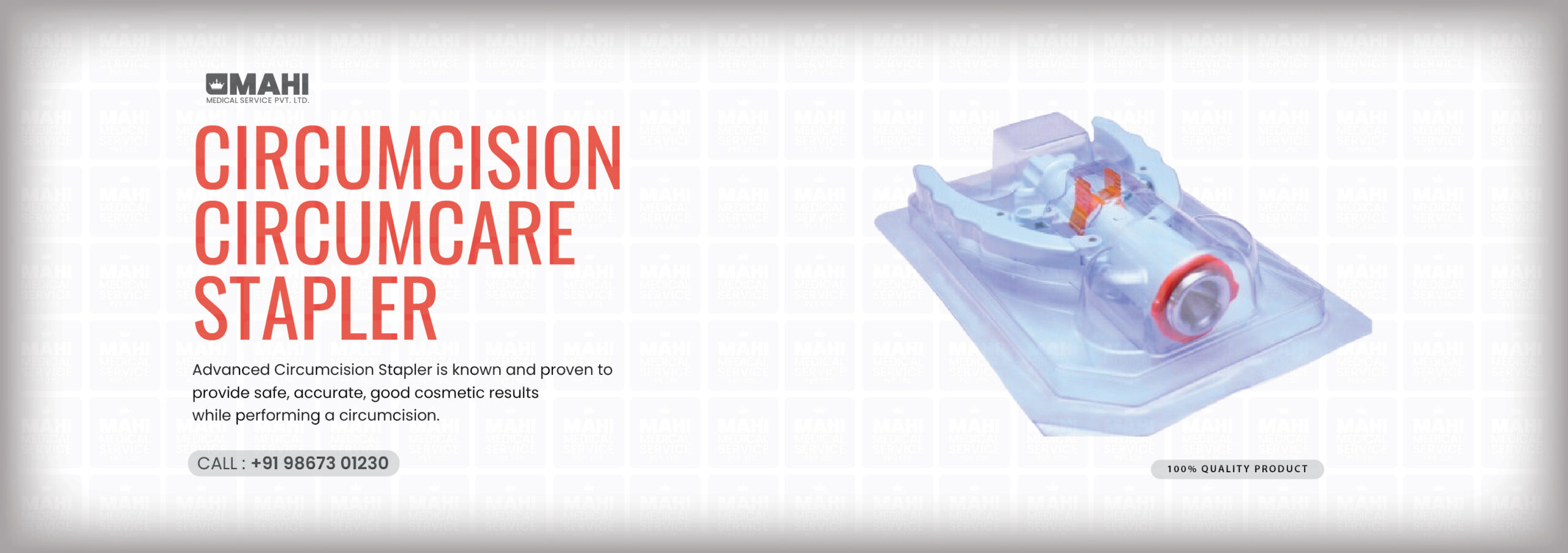
Circumcision Stapler Circumcision
we don’t think you need any introduction about what circumcision is, what are the benefits of circumcision or who should get circumcised etc. Typically, circumcision takes the first spot in the list that counts the number of surgeries performed by our popular urologists at our hospital.
Let us directly get into the subject – Stapler Circumcision also called ZSR Circumcision or Anstomat Circumcision.
What is Stapler Circumcision?
In simple terms, a device called ‘Stapler or Anstomat’ is used by the doctor / surgeon to perform Circumcision (in babies or men), such a process is called ‘Stapler Circumcision’.
This stapler device (that you can see in the above picture) has been developed by medical specialists in China. It includes two parts – inner bell & outer bell. The inner bell is designed to protect the inner glans and the outer bell consists of a blade to cut the foreskin and staples to close the wound for simultaneous hemostasis.
How is Stapler Circumcision Performed?
As the very first step in Stapler Circumcision, the size of the penis just below the glans is measured by the urologist. Penis is then surgically disinfected with iodine or other equivalent disinfecting liquids before performing the circumcision procedure.

Referring to the image above, here are the steps performed in Stapler Circumcision:
- The size of the penis, just below the glans is measured (as mentioned earlier).
- After disinfecting the penis with iodine or equivalent, the dorsal nerve block and circumferential block are done with 1% lidocaine.
- Then, the inner bell is placed inside the foreskin of the penis to cover the glans; the edge of the bell is brought to the level of coronal sulcus. In cases where the patient is suffering from Phimosis, a dorsal slit has to be made to correctly the position the inner bell of the stapler.
- The safety shield is then removed from the outer bell.
- The outer bell is placed over the inner bell while the frenulum is kept intact. The safety bolt of the stapler is then removed.
- The screw on top of the stapler is then rotated clockwise to sandwich the foreskin tightly; the handles / prongs of the stapler are triggered/ pressed to cut the foreskin and the wound is closed by staples at the same time.
- The device is then unscrewed and removed
- The wound on the foreskin is checked and pressed with gauze for a minute or two to stop any bleeding that might occur.
- Hemostasis is achieved with a compression bandage that is put over the penis as shown in the picture #9
Is Stapler Circumcision safe? How does it compare with other techniques of circumcision?
Just like other techniques of circumcision including laser, stapler circumcision is a safer process. However, it has got it’s own benefits when compared to other methods of circumcision that are mentioned below:
- The time taken for the operation / surgery is less than 10 minutes.
- Blood loss is 5 times lesser than other methods of surgery.
- The pain experienced by the patient is way less than the other methods.
- Healing time is quicker but barely by a day or two.
- Possibility for complications is less than half compared to other circumcision techniques.
- Less bleeding
- Near 0 chances of wound (caused by surgery) re-opening
- Less Edema
- Lower chances of infection.
Medical problems addressed with circumcision
- Phimosis – A condition when the foreskin on the penis head can’t be pulled back
- Paraphimosis – A condition when the foreskin can’t be pulled back onto the penis head. (Opposite of Phimosis)
- Balanitis – Inflammation of the foreskin and the head of the penis
- Reducing risk of Sexually Transmitted Infections Transmission